Loading
See where your child’s day goes, set limits that hold when you’re not there, and reward the weeks they win.
Screens aren’t going away. Balance is the goal — not zero.
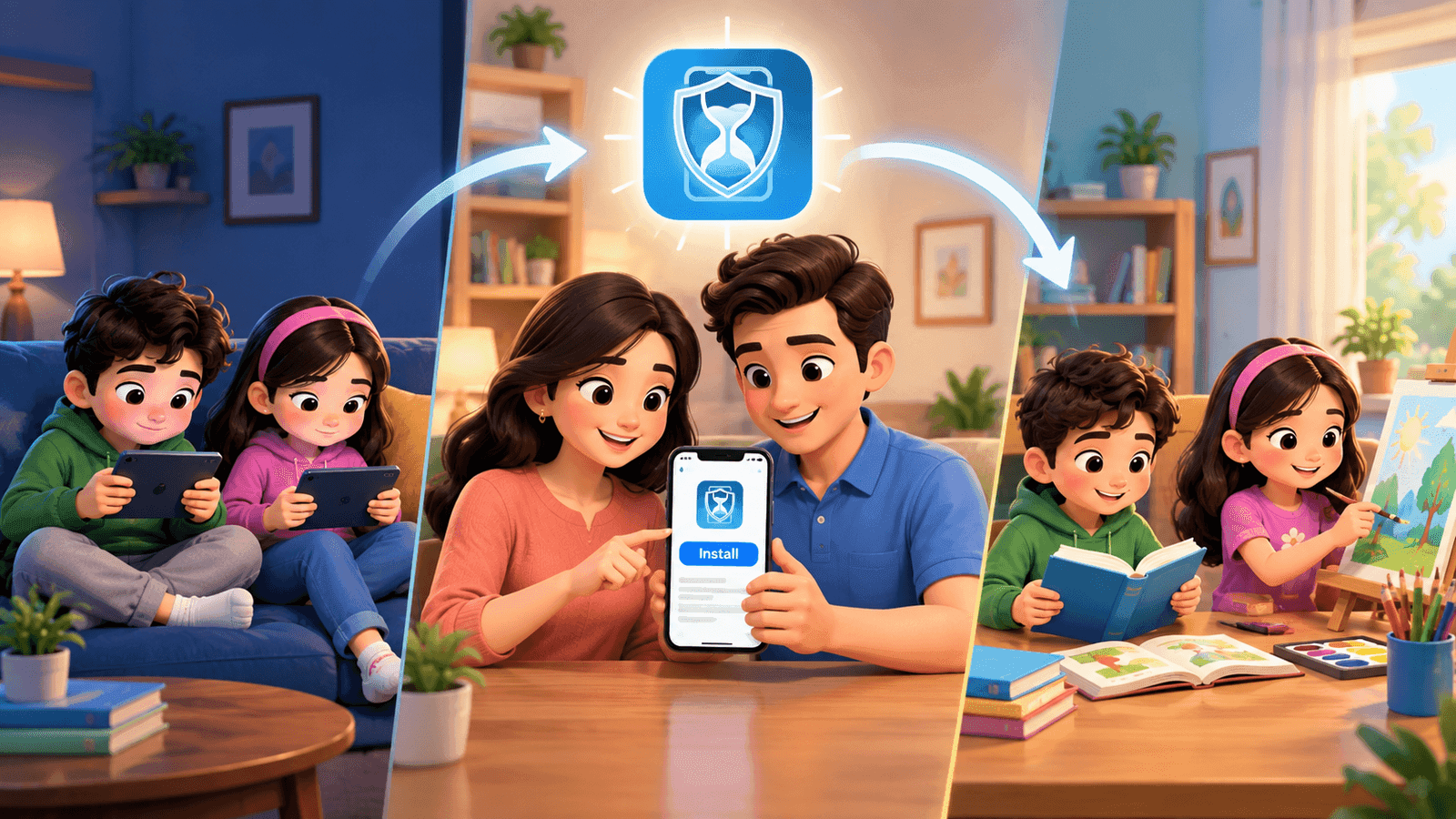
Inside the app
Screens are part of growing up. We can’t and shouldn’t erase them. What matters is what they miss because of them.
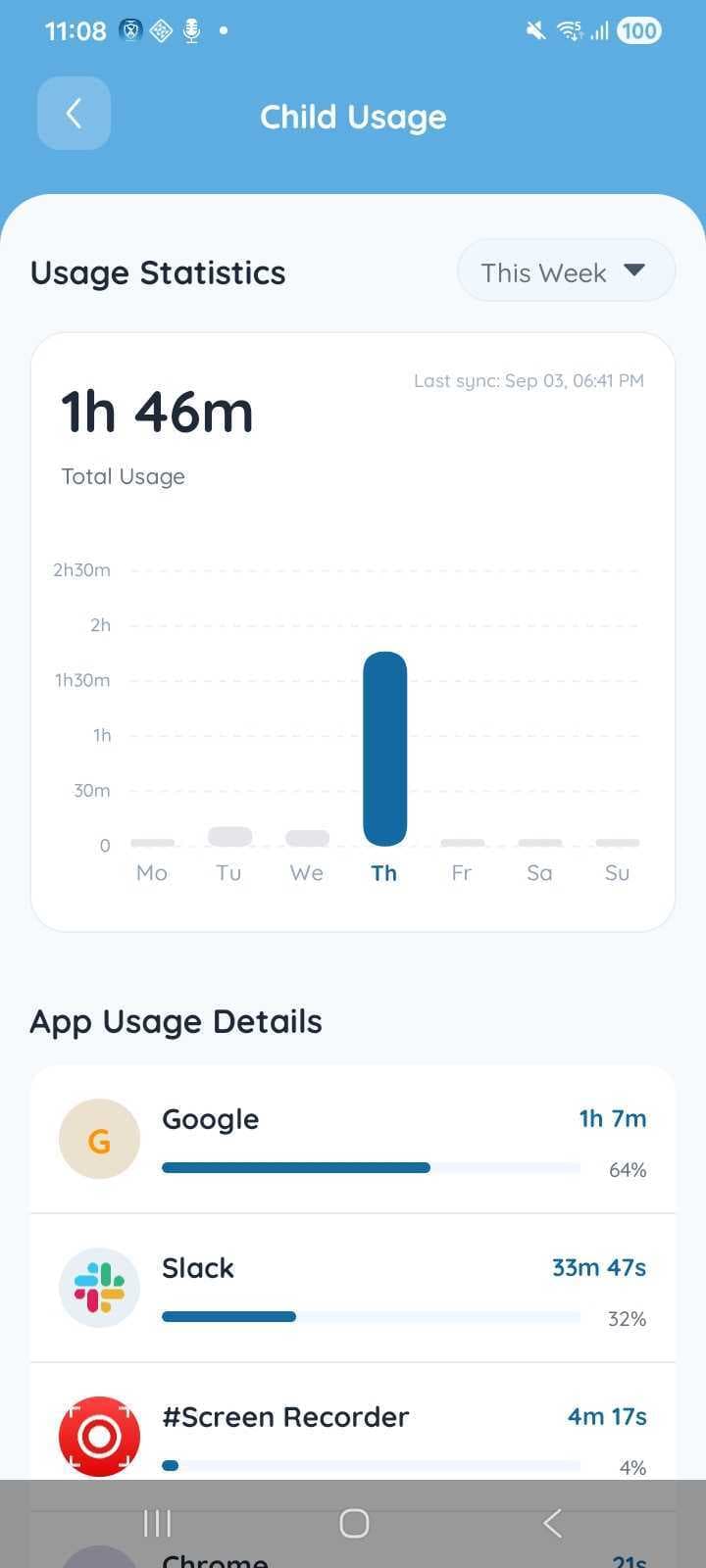
Usage, by app
A week of screen time at a glance, then every app that filled it.
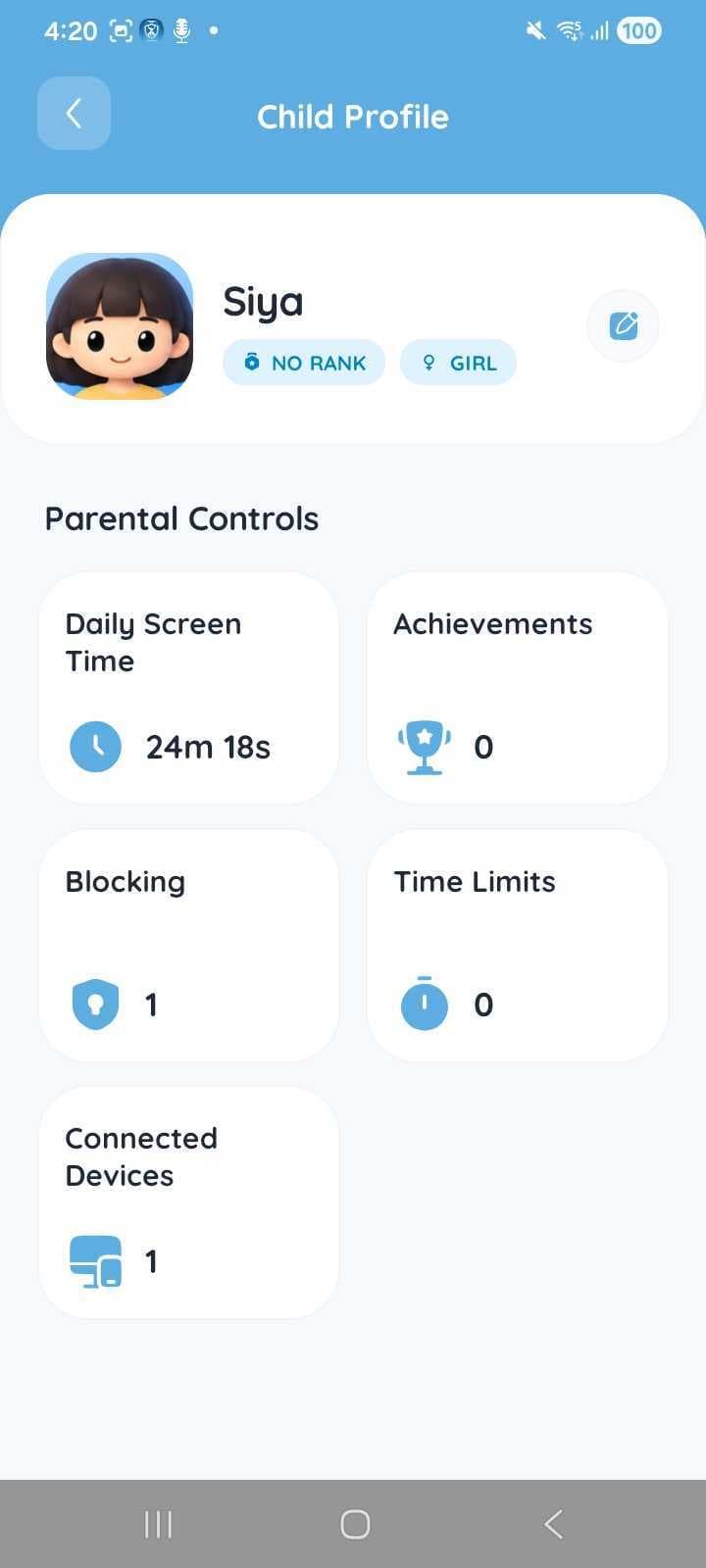
Parental controls
Screen time, app blocks and timers, set for each child.
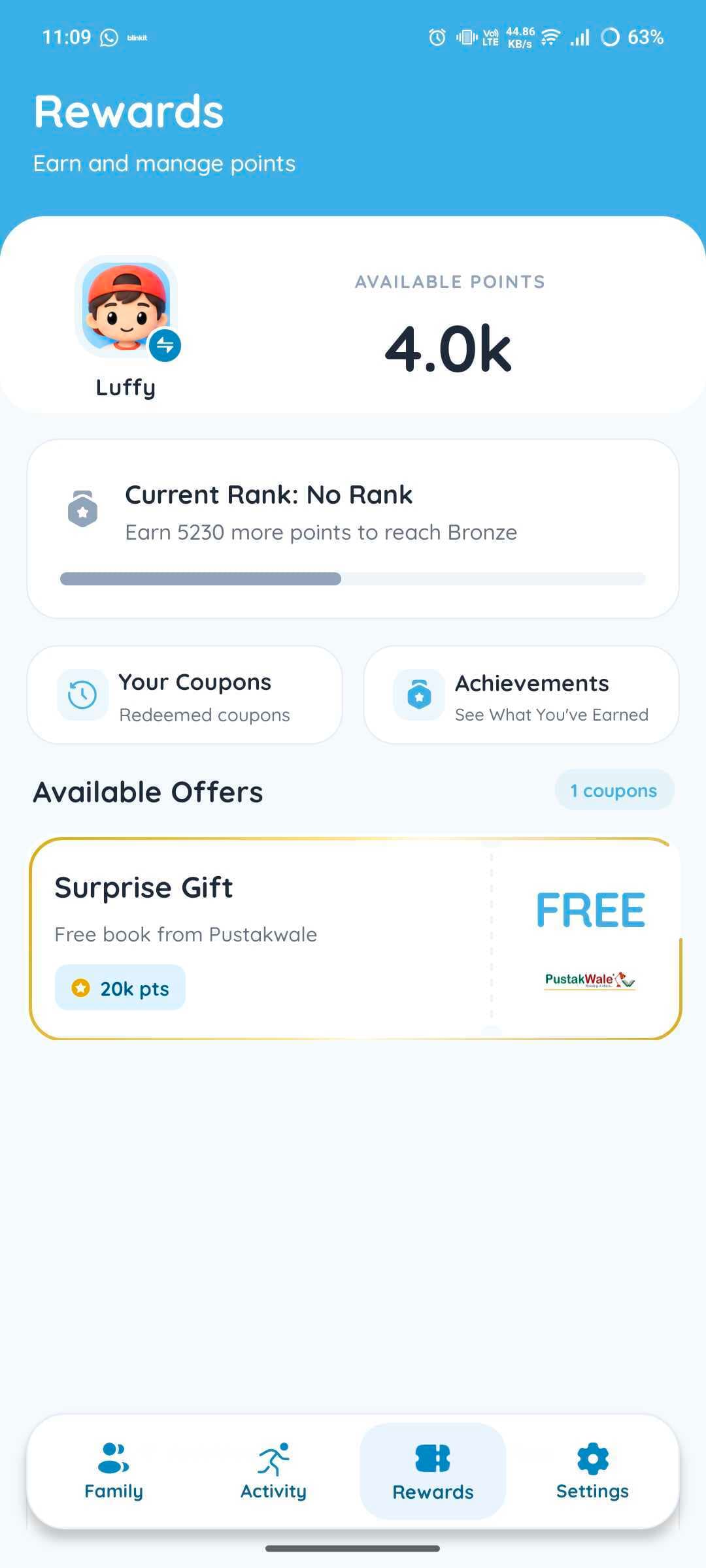
Rewards
Kids bank points, climb the ranks, and trade them for real offers.
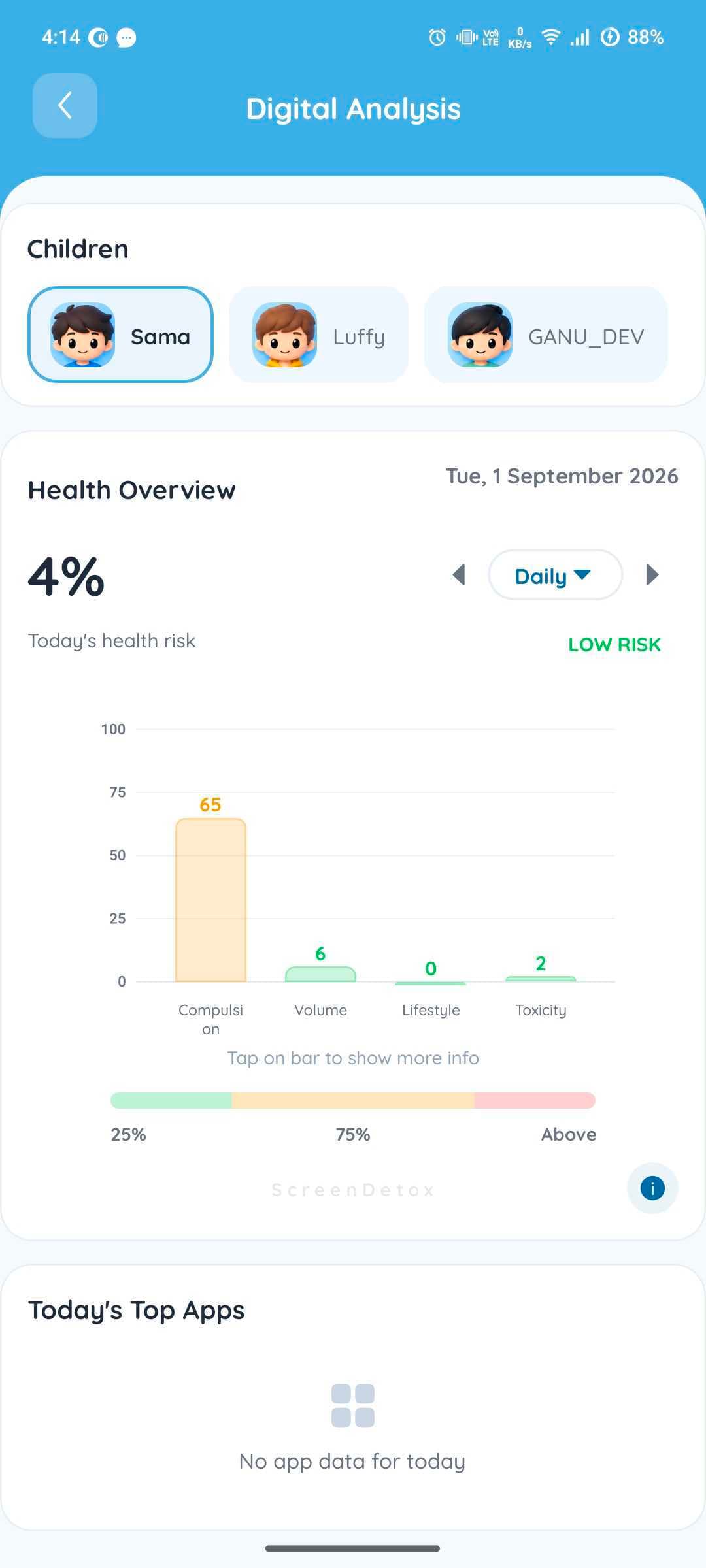
Digital health
A daily health risk score, with compulsion, volume, lifestyle and toxicity broken out.
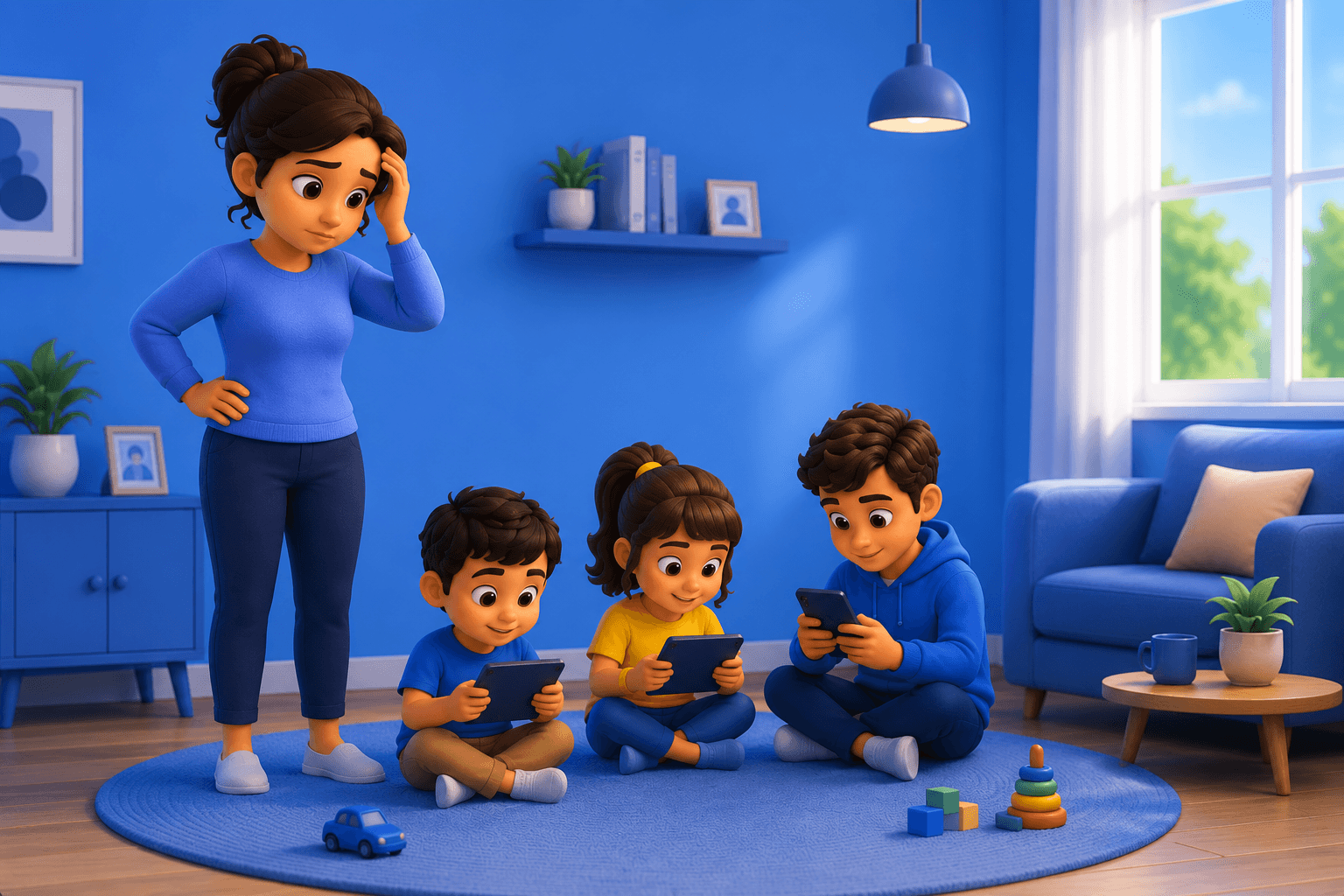
Screen time in India
Average daily screen time by age. For under-twos, the guideline is zero.
| Age group | Average hours per day and share exceeding safe limits |
|---|---|
| Under 2 yearsGuidance says zero. Most exceed it. | 1.23hrsMostover limit |
| Ages 2–560–70% are past the safe limit. | 2.22hrs60–70%over limit |
| Ages 3–645–54% are past the safe limit. | 1.5hrs45–54%over limit |
| AdolescentsOver 70% are past healthy use. | 4.5hrs>70%over limit |
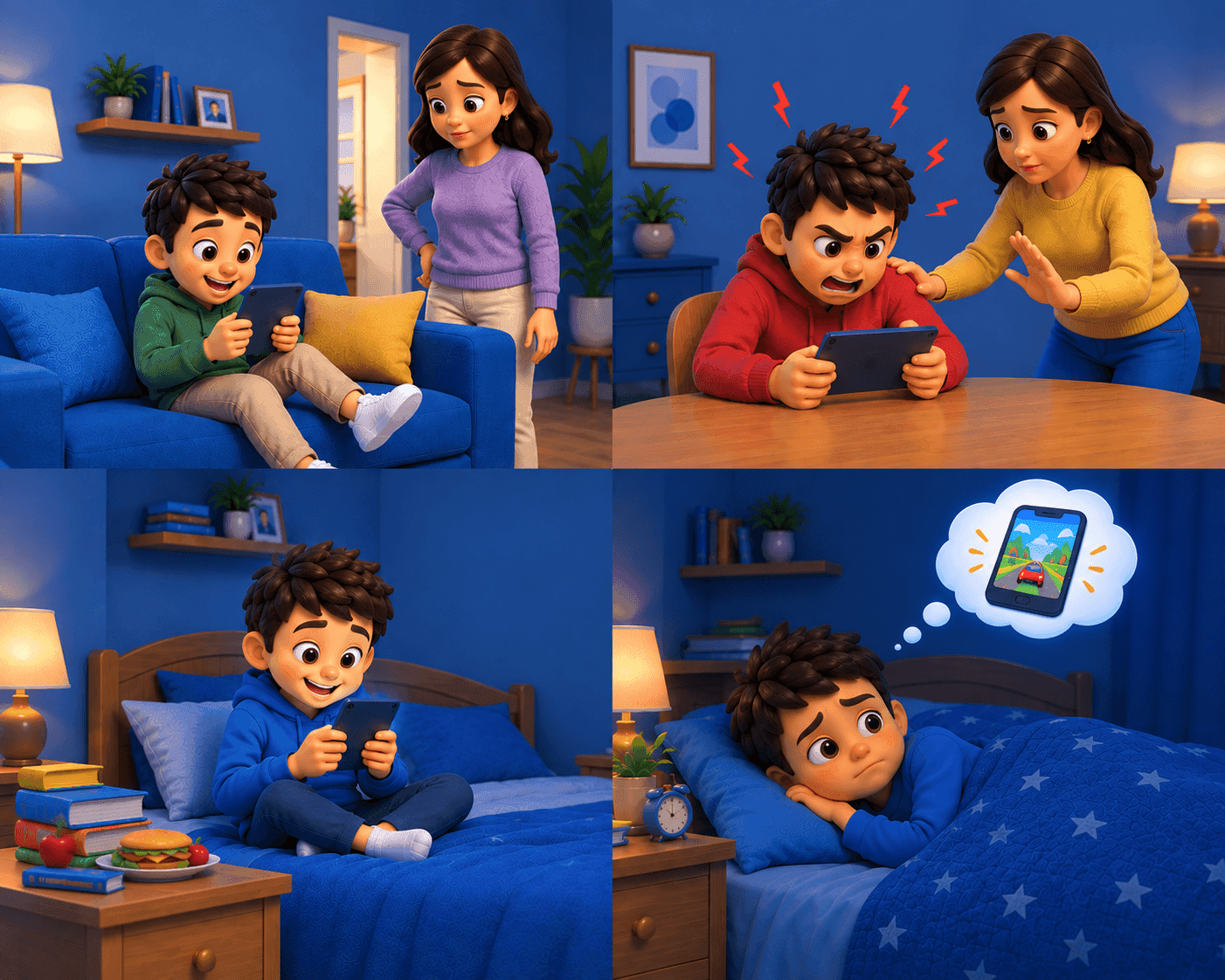
What is screen addiction?
Compulsive device use — enough that it cuts into sleep, school, health and relationships.
It looks like low mood, poor sleep, shorter attention, and fewer of the face-to-face hours childhood is made of.
Ten minutes turns into two hours, and nobody noticed it happen.
Ending a session sets off anger or tears the moment doesn't explain.
Things that used to be automatic start getting skipped.
Being away from the phone is uncomfortable, not just boring.
The goal
Screens aren’t going anywhere. The goal is proportion — with sleep, school, play and family.

Features
Set limits, see the day honestly, reward the effort, and keep the settings out of reach.
Set daily limits for each app, or block apps that shouldn’t be used at all. When time is up, the child sees a full-screen block—not a notification they can swipe away.
Live usage, app by app, that keeps tracking even when the app is closed.
Kids earn points and visible achievements for hitting their own targets.
A separate profile, rules and dashboard per child. Pair once with a code.
Kids request extra time; you approve or decline from your phone.
A PIN protects every setting, with security questions if you need to recover it. Only parents can change the rules—not persistent kids.
Under the hood
Screen time keeps being tracked in the background, even when the app is closed. If tracking stops, it automatically starts again.
Limits can’t be bypassed with a simple notification. When time is up, the screen is blocked and stays blocked.
Change a limit on your phone and the child's device applies it in seconds.
Usage is stored on the device first and synced later, so a patchy network leaves no gaps.
Rewards
Points and visible achievements for every target they hit.

Privacy
We never sell it. Usage data runs the app and nothing else — stored on servers in India under the DPDP Act.

Beyond the app
Ten questions, an honest read on where your family stands.
Start the testSessions for schools, societies and parent groups on healthy screen habits.
Ask about workshopsQuestions parents ask
Compulsive device use that starts interfering with sleep, school, health and relationships. It is not about the hours, but what those hours cost.
Yes — free on the Google Play Store. It is built by Anveshak Technology & Knowledge Solutions LLP.
Not yet. Monitoring and blocking rely on deep Android integration, so the app is Android-only for now.
No. A background service keeps monitoring and restarts itself if it is killed.
Settings are protected by a parent PIN. Limit changes and unblocking need the parent's device.
No. The goal is balance — keeping screens in proportion to sleep, play, school and family.
Install ScreenDetox, pair your child’s device, and see where the day goes. Free, two minutes.